
Investors' wealth has swelled by over Rs 13.16 lakh crore as benchmark indices continued their northward march for the fifth session on the trot on Monday. The 30-share BSE Sensex jumped 935.72 points or 1.68 per cent to settle at 56,486.02 on Monday. In the past five trading sessions, the benchmark has zoomed 3,643.27 points or 6.89 per cent. Propelled by the optimism in equities, the market capitalisation of BSE-listed firms jumped by Rs 13,16,944.74 crore in five trading sessions to Rs 2,54,27,775.78 crore.

PowerGrid was the top loser in the Sensex pack, slumping over 4 per cent, followed by ONGC, IndusInd Bank, Kotak Bank, L&T, Asian Paints and Bajaj Auto. NSE Nifty tanked 258.40 points to 14,359.45.
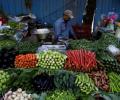
Retail inflation slowed to 4.29 per cent in April from 5.52 per cent in March, mainly due to easing food prices, government data showed on Wednesday. The Reserve Bank mainly factors in the retail inflation based on Consumer Price Index (CPI) while arriving at its monetary policy. As per the data released by Ministry of Statistics and Programme Implementation, inflation in the food basket was 2.02 per cent in April, down from 4.87 per cent in the preceding month.

'Traders have stocked up for upcoming festivals and will make a loss if stores remain shut now. We suffered last year. We can't suffer again. There is no scientific basis for closing all commercial establishments. How long will the government keep them shut?'

A senior official in the central labour commissioner's office said the efforts of the government were to resolve the cases amicably and not to press for legal action against employers. "Everyone is going through tough times. We could initiate legal action if we want but that's not the idea. We want to address the issues amicably," the official said.

The Congress on Tuesday termed as rhetoric and hollow on specifics the prime minister's address to the nation, saying there was no mention of a financial package or concrete steps to revive the economy.

Lockdowns imposed by the states in April and May to contain the second wave of the deadly COVID-19 pandemic has likely led to the economy contracting 12 per cent in the June quarter as against 23.9 per cent contraction in the same quarter in 2020, says a brokerage report. The economy had its worst contraction on record in FY21 at 7.3 per cent as the 2.5 months of unplanned lockdown announced by the centre with just a four-hour notice had crippled the economy in the first quarter with a massive 23.9 per cent contraction, which improved to -17.5 per cent in the second quarter.
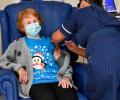
The warning comes after two National Health Service (NHS) workers experienced 'anaphylactoid reaction' symptoms shortly after being injected, but are now said to be recovering well.

The five-day lockdown, ordered after a new COVID-19 outbreak at a hotel, was due to start at midnight.

In the Army headquarters, the wings handling military operations, military intelligence, operational logistics and strategic movement will carry out their functions with bare minimum staff strength till April 19, according to the order. Within the command headquarters, wings handling manpower, logistics and operations will only function with skeletal staff.

Closures, travel restrictions, and self-isolation measures due to the coronavirus have cleared public squares, roads, and travel destinations across the globe. Photographers have been capturing the eerie stillness of these public spaces, recently emptied of the crowds they were built for.

"The Dubai camp is for Olympic B qualifiers who are in India and currently unable to train," Swimming Federation of India secretary-general Monal Chokshi told Reuters.

Police and Central Reserve Police Force personnel were deployed in strength across the valley, especially Srinagar city, to ensure that the plans of separatists to disturb peace do not succeed

Metro rail services may be allowed from September 1 when the 'Unlock 4' phase in the graded reopening from the coronavirus-induced lockdown begins, but schools and colleges will not reopen immediately, an official said.
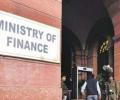
The finance ministry on Wednesday reimposed expenditure curbs on ministries and government departments for July-September quarter. There will be no spending restrictions on the ministries of health, rural development, agriculture, MSME (micro, small and medium enterprises) and railways as part of a two-pronged strategy. "The existing guidelines for expenditure control have been reviewed. "Keeping in view the evolving situation arising out of Covid-19 and anticipated cash position of the government, it is felt essential to regulate Quarterly Expenditure Plan (QEP)/Monthly Expenditure Plan (MEP) of specific ministries/departments for July-September, 2021," the Department of Economic Affairs in the finance ministry said in a notification.

The Maharashtra government has announced a five-level plan to relax the coronavirus-induced restrictions in the state, based on the weekly positivity rate and the occupancy of oxygen beds.

India's manufacturing sector activity witnessed a significant loss of growth momentum in May due to the intensification of the COVID-19 crisis and its detrimental impact on demand, a monthly survey said on Tuesday. The seasonally adjusted IHS Markit India Manufacturing Purchasing Managers' Index (PMI), fell to 50.8 in May, down from 55.5 in April, as companies observed the slowest rises in new work and output in ten months amid intensification of the COVID-19 crisis. In PMI parlance, a print above 50 means expansion while a score below 50 denotes contraction.

The standard operating procedure is likely to be put in place, that needs to be followed at temples once opened for public.

The Oxford vaccine, which also has a tie-up with the Serum Institute of India, was first administered to Brian Pinker, an 82-year-old Oxford-born dialysis patient. Pinker is among the first to be vaccinated by the Oxford University Hospital's (OUH) chief nurse, hailed as a major milestone in the phased vaccination programme being undertaken by the National Health Service (NHS).

Maharashtra Navnirman Sena chief Raj Thackeray on Tuesday said migrant workers from other states were responsible for the rapid spread of coronavirus in Maharashtra, which has been reporting a large number of new infections since the last few weeks.

Wall Street brokerage Goldman Sachs has lowered its estimate for India's economic growth to 11.1 per cent in fiscal year to March 31, 2022, as a number of cities and states announced lockdowns of varying intensities to check spread of coronavirus infections. India is suffering the world's worst outbreak of COVID-19 cases, with deaths crossing 2.22 lakh and new cases above 3.5 lakh daily. This has led to demand for imposition of nationwide strict lockdowns to stem the spread of the virus - a move that the Modi government has so far avoided after the economic devastation last year from a similar strategy.

Tourists at the Taj Mahal were asked to follow Covid protocols and were thermal screened and sanitised before entering the premises.

FMCG firms such as ITC, Parle Products, Marico, Emami, PepsiCo India and CG Corp Global on Wednesday assured uninterrupted supply of their products based on the learnings from the last year's lockdown, even as surge in COVID-19 cases in India forced Maharashtra to declare a 15-day curfew while other states also imposing various restrictions.
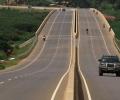
If 2019-20 (FY20) was an unusual year for highway construction in India, with the pace of work slowing down for the first time since the Narendra Modi government assumed power in 2014, largely due to the general elections in May and liquidity crunch, the outbreak of the Covid-19 pandemic in 2020-21 (FY21) only made matters worse with lockdowns and labour unavailability. The pace of highway construction in 2021-22 (FY22) has not been able to bulldoze the pandemic barriers in a year marred by two Covid-19 waves - the second at the start of the fiscal year, the third towards the close. With localised lockdowns and restrictions on mobility, highway construction growth in the country has now fallen to a five-year low.

The brokerage said that the reform measures announced by the government will help growth only over the medium term and are not expected to have any benefit in the near-term.

Gita Ramjee has become the first Indian-origin South African to have died after contracting the novel coronavirus. Ramjee, a stellar vaccine scientist and an HIV prevention research leader, had returned from London a week ago but reportedly showed no symptoms of COVID-19.

To help revive the economy battered by COVID-19, Finance Minister Nirmala Sitharaman on Monday announced a slew of measures, including Rs 1.1 lakh crore credit guarantee scheme for improving health infrastructure, and enhancing the limit under the ECLGS by 50 per cent to Rs 4.5 lakh crore for the MSME sector facing liquidity crunch. Sharing the details of stimulus package, the finance minister said this comprises eight relief measures and other eight measures to support the economic growth. She announced Rs 1.1 lakh crore loan guarantee scheme for COVID-affected sectors, including health sector, which includes guarantee cover for expansion or for new projects. Besides, she said, additional Rs 1.5 lakh crore limit enhancement done for Emergency Credit Line Guarantee Scheme (ECLGS) scheme.

The Union health ministry said West Bengal and Himachal Pradesh reported a casualty each on Monday, taking the total number of deaths to nine in the country due to COVID-19.

The agency welcomed the Rs 1.70-lakh crore package announced by Finance Minister Nirmala Sitharaman earlier in the day but said more measures like loan forbearances for small businesses and households are necessary.

The restriction will have a direct impact on Eid festivities, apart from other religious gatherings.

At the same, it said the latest figures do not establish a clear trend and in no way the government is relaxed about anything at this point.
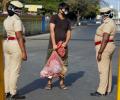
'It is unclear whether clothing or home items qualify as essential items. A lot of professionals are working from home, and they need electronics for their productivity. Does this qualify as essential?'

South Africa has lifted overnight curfew rules that were first imposed nearly two years ago, with officials saying the country may have passed the peak of its fourth wave of COVID-19 infections, offering hope to other nations facing a surge in cases fuelled by the fast-moving Omicron variant.
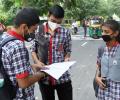
He had announced on October 30 that schools will remain closed until further orders, saying parents were not in favour of sending their ward to schools yet.
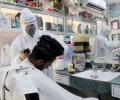
Kejriwal said there will be no restrictions on the number of people travelling in four-wheelers, two-wheelers, auto-rickshaws, e-rickshaws and other vehicles in the city. He said that until now, shops in markets were being allowed to open on odd-even basis, adding that there are no such restrictions mentioned by the Centre in its latest guidelines.
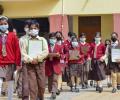
Universities and schools across the country have been closed since March 16 when the Centre announced a countrywide classroom shutdown as part of measures to contain the spread of the novel coronavirus.

The ministry of statistics and programme implementation on Friday released quick estimates of the Index of Industrial Production (IIP) which showed the index value at 88.4 in May against 53.6 in April, indicating a graded pickup in industrial activity. The index stood at 135.4 in May 2019.
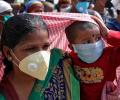
India's COVID-19 curve has been steadily rising throughout the lockdown period with a massive spike in cases in the fourth phase of the lockdown that ended on May 31 and afterwards.

Since April, India has seen multiple strains of the coronanavirus sweep the nation, upending life and businesses alike. Out-of-home retail and discretionary categories such as durables, auto, fashion, lifestyle, hospitality, food services, travel, and tourism have been the worst-hit as Covid cases remain high, leaving state governments with no option but to curtail mobility and economic activity.

Overall, the domestic FMCG market bounced back to levels of 98 in June compared with 75 in May and 101 in March before the nationwide lockdown was announced. The pre-Covid March index for foods was 103, and for non-foods, it was 99.
 © 2025 Rediff.com - Investor Information - Advertise with us - Disclaimer - Privacy Policy - Sitemap - Feedback - About us - Terms of use - Grievances